Pumpkin Seed Oil for Prostate Health: Benefits, Uses and What to Look For
| What it is | Pumpkin seed oil is a nutrient-rich oil from pumpkin seeds — a traditional men’s-wellness ingredient. |
| Why men use it | As a natural source of plant sterols, zinc and fatty acids for everyday, general prostate and urinary support. |
| Vs saw palmetto? | Complementary, not rivals — the two are often combined rather than chosen between. |
| What to look for | A transparent label, a stated amount, and a quality, GMP-made formula. Not a treatment or cure. |
If you have looked closely at prostate-supplement labels, you have almost certainly seen pumpkin seed or pumpkin seed oil listed among the actives. It is one of the quieter ingredients in men’s wellness — less famous than saw palmetto, but with a long traditional following of its own. So what is the appeal? This guide explains what pumpkin seed oil is, the benefits men traditionally value it for, how it fits a daily routine, how it compares to saw palmetto, and what to look for on the label.
This is general educational information for men over 40, not medical advice, and nothing here is a claim to treat or cure anything. Pumpkin seed oil is described here by its traditional and general use.
What is pumpkin seed oil?
Pumpkin seed oil is pressed from the seeds of the pumpkin (Cucurbita), and it is a genuine food-derived ingredient — the same seeds people happily snack on. Nutritionally, pumpkin seeds are well known as a natural source of zinc, plant sterols (phytosterols), magnesium and unsaturated fatty acids. That combination is a big part of why the seed and its oil have found a lasting place in men’s wellness traditions, where they are used as an everyday, food-based support ingredient rather than a dramatic intervention.
Because it starts life as a food, pumpkin seed oil tends to be viewed as a gentle, well-tolerated addition to a routine. That said, in a supplement it is a concentrated ingredient, so the usual rules apply: follow the label and treat it as part of a broader healthy-habits picture.
Pumpkin seed oil for prostate health: the traditional benefits
In the context of men’s formulas, pumpkin seed oil is valued for everyday, general support of normal prostate and urinary comfort. Men reach for it as part of a daily wellness routine, in the same spirit as saw palmetto or pygeum. Here is the honest framing of why it is popular:
- ✓ A natural source of plant sterols: the phytosterol family shows up across many men’s-wellness botanicals.
- ✓ Naturally rich in zinc: a mineral men often associate with everyday wellness.
- ✓ Supplies unsaturated fatty acids: the “oil” part that pairs well with other plant actives.
- ✓ Long traditional use: a familiar, food-based ingredient in men’s routines.
- ✓ Generally well-tolerated: it starts as a food, which many men find reassuring.
A crucial caveat: research on pumpkin seed oil is still developing, and it is not a proven treatment for any condition. Health information should always describe it as a traditional, general-wellness ingredient — which is exactly how we present it here. The foundational work is still done by everyday habits, covered in our guide on how to support prostate health after 40.
Pumpkin seed oil vs saw palmetto: complementary, not rivals
A common question is whether pumpkin seed oil is “better” than saw palmetto. It is the wrong frame. Saw palmetto is a standardized berry extract with the longest, most familiar track record in men’s prostate wellness; pumpkin seed is a nutrient-dense seed ingredient that brings zinc, sterols and fatty acids to the table. They do different jobs, which is precisely why they are so often found together on the same label rather than pitted against each other.
This is the same logic that runs through most well-built men’s formulas: combine complementary plants rather than betting everything on one. If you want to see that reasoning laid out in detail, our comparison of a multi-ingredient prostate formula vs saw palmetto alone is the natural next read, and our look at pygeum vs saw palmetto covers another popular pairing.
How pumpkin seed oil is used in a daily routine
In supplement form, pumpkin seed oil is taken as part of a once-daily routine, usually alongside other plant actives. As with any botanical, it is used gradually and consistently rather than for a quick effect. Because it is an oil-based ingredient, many men find it sits comfortably when taken with a meal. There is no official universal dose — amounts vary by product — so the right approach is simply to follow your product’s label and not exceed it.
If you are curious about the mechanics of a daily habit — when to take it and why consistency matters — our practical guides on the best time of day to take a prostate supplement and how long a prostate supplement takes to work cover both in plain English.
What to look for on the label
Not all pumpkin seed ingredients are presented equally, so a few label habits help you buy well:
- ✓ A stated amount: the pumpkin seed or pumpkin seed oil should be listed with a clear quantity, not buried in a vague blend.
- ✓ Sensible company: it works best as part of a thoughtful stack with ingredients like saw palmetto and pygeum.
- ✓ Quality manufacturing: made in an FDA-registered, GMP-certified facility.
- ✓ Clean formulation: non-GMO, minimal unnecessary fillers, clear allergen information.
- ✓ A guarantee: a satisfaction guarantee keeps a first bottle low-risk.
For the complete, repeatable checklist, see our buyer’s guide to choosing a prostate supplement, or head back to the Flow Strong homepage to see how the full formula is assembled.
How Flow Strong uses pumpkin seed
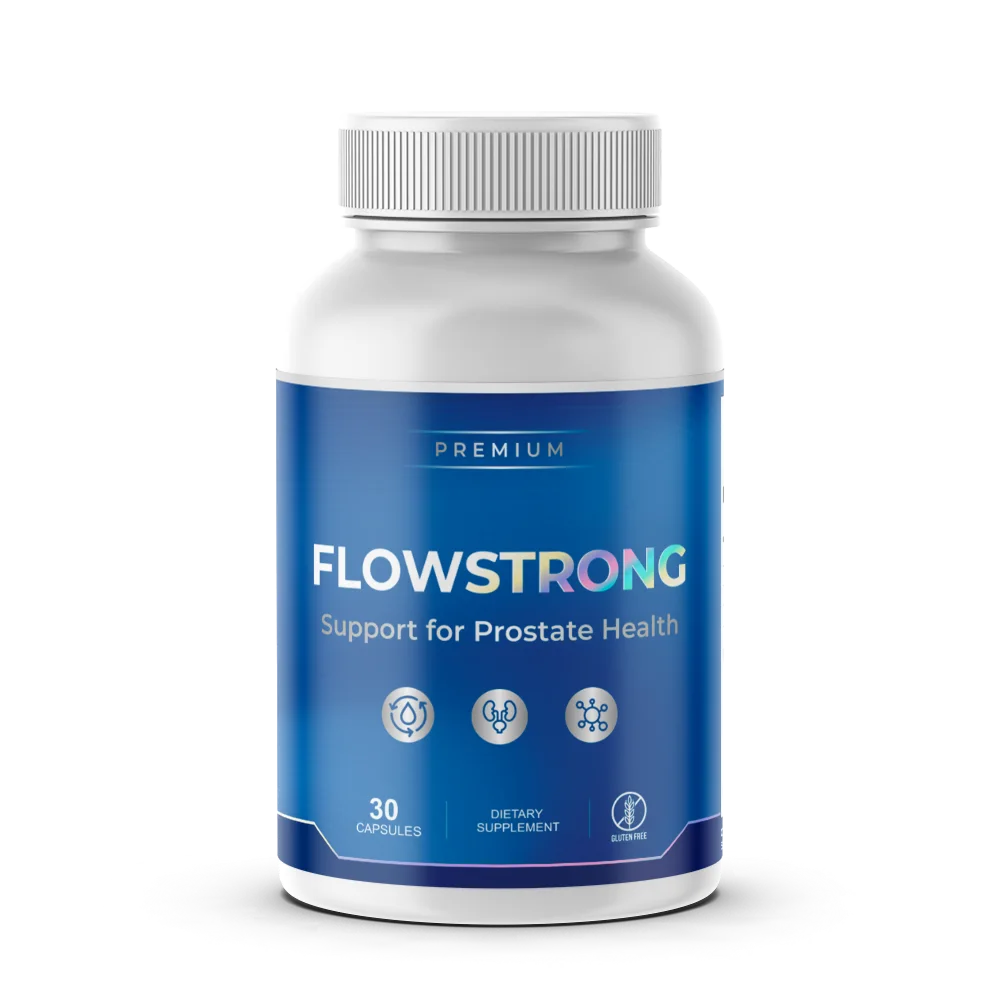
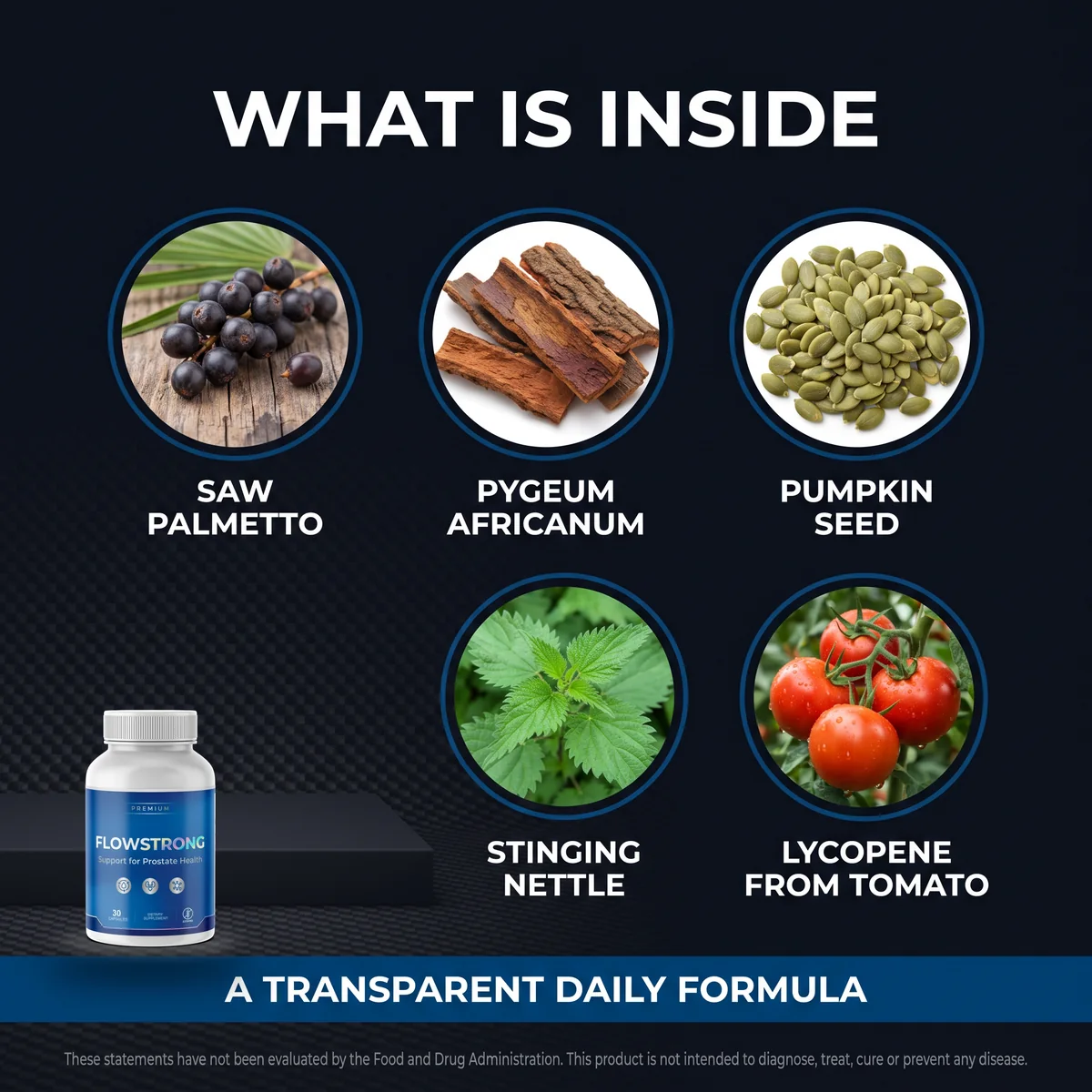
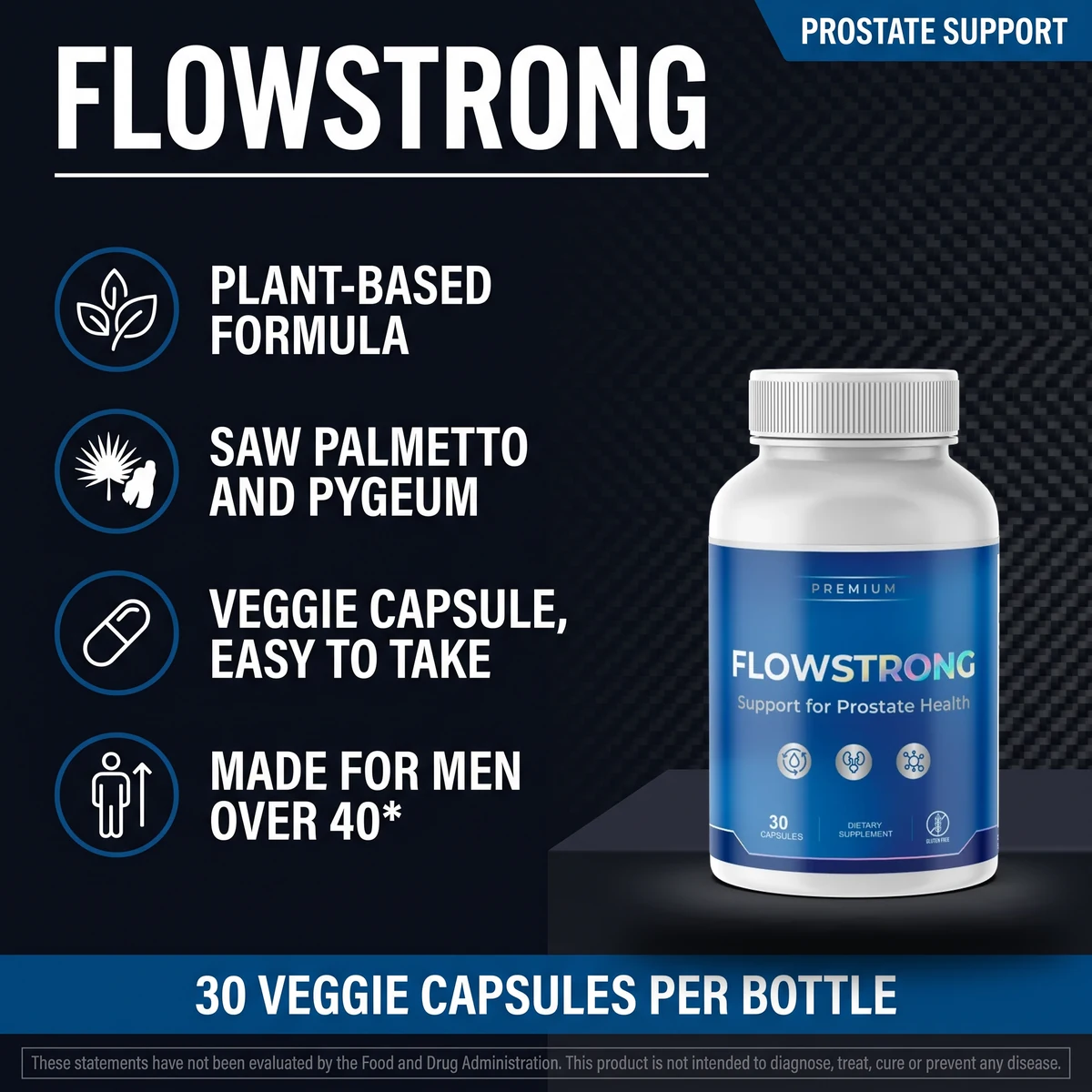
Pumpkin seed is one of the five plant-based actives in Flow Strong™. It sits alongside standardized saw palmetto, pygeum africanum, stinging nettle and tomato lycopene in a once-daily veggie capsule — a deliberate, complementary stack rather than a single hero ingredient. Everything is clearly listed on the label, made in the USA in an FDA-registered, GMP-certified facility. You can view the full ingredient panel and current packages on the order page.
Want pumpkin seed in a complete plant-based stack?
Flow Strong™ combines pumpkin seed with saw palmetto, pygeum, stinging nettle and tomato lycopene in one once-daily veggie capsule — backed by a 60-day money-back guarantee. Multi-bottle packages carry the best per-bottle value.
See Flow Strong PackagesA quick word on safety and your doctor
Pumpkin seed oil is generally considered well-tolerated as a food-derived ingredient, but “natural” is never the same as “irrelevant to your health picture.” Some people may be sensitive, and any concentrated supplement can, in principle, matter if you take medication or manage a condition. If you take blood thinners, are scheduled for surgery, or have an ongoing health issue, have a quick conversation with your doctor or pharmacist first. For a fuller discussion, see our guide on prostate supplement safety and side effects. And remember that no supplement replaces age-appropriate screening or a check-up for a symptom that concerns you.
The bottom line
Pumpkin seed oil is a food-derived, nutrient-rich ingredient — a natural source of zinc, plant sterols and fatty acids — that men have long valued for everyday, general prostate and urinary wellness. It is not a treatment or cure, and it is not a rival to saw palmetto; it is a complementary partner, which is why quality formulas tend to include both. Look for a transparent label, a stated amount and a GMP-made product, use it consistently, and keep your doctor in the loop about anything specific.
The trial that put pumpkin seed oil up against a prescription drug
Pumpkin seed is unusual in this category for having been compared directly with a standard prescription medicine. A single-blind randomized clinical trial pitted pumpkin seed oil against tamsulosin for benign prostatic hyperplasia symptom relief (BMC Urol, 2021) and reported a significant improvement in symptom scores and quality of life in both arms, with the drug’s improvement significantly larger at one and three months. It is one 73-patient trial, not a body of evidence, and reading it as proof that a seed replaces a drug would be exactly the wrong conclusion — but it does explain why pumpkin seed keeps its place in men’s formulas.
One detail deserves emphasis: that study used a concentrated oil at a defined intake, which is not the same as seed powder in a multi-ingredient capsule. Dose and form travel together, and a pinch of seed in a blend inherits the reputation of the trial without inheriting its dose. Our comparisons of stinging nettle and saw palmetto and of lycopene and zinc apply the same scepticism to the other actives you will find beside it.
And the line no supplement page should blur: urinary symptoms are a medical matter. Blood in your urine or semen, pain or burning when you pass urine, fever or chills alongside urinary symptoms, or any new or worsening change in how often or how urgently you go — those need a doctor who can examine and test you, not a capsule. Being unable to pass urine at all is a reason to seek urgent care. These symptoms can point to a urinary infection, an enlarged prostate or prostate cancer, and clinical guidance on evaluating them is summarised in the American Academy of Family Physicians’ evidence review of benign prostatic hyperplasia (Am Fam Physician, 2023) and by the NIDDK. No dietary supplement, Flow Strong included, is a treatment for any of them.
Frequently asked questions
What is pumpkin seed oil good for in a prostate supplement?
Pumpkin seed oil is a traditional men’s-wellness ingredient valued as a natural source of plant sterols, zinc and fatty acids. In prostate formulas it is used for everyday, general support of normal prostate and urinary comfort, alongside botanicals like saw palmetto. It is not a treatment or cure, and results vary from person to person.
Is pumpkin seed oil better than saw palmetto?
Neither is “better” in a simple sense, and they are not really rivals. Saw palmetto is a berry extract with the longest track record, while pumpkin seed is a nutrient-rich seed ingredient. Because they are complementary, many quality formulas include both rather than forcing a choice between them.
How much pumpkin seed oil should I take for prostate support?
There is no single official dose, and amounts vary by product. The sensible approach is to follow the directions on your supplement’s label and not exceed them. If you are unsure what is right for you, ask your doctor or pharmacist.
Does Flow Strong contain pumpkin seed?
Yes. Pumpkin seed is one of the five plant-based actives in Flow Strong, combined with standardized saw palmetto, pygeum africanum, stinging nettle and tomato lycopene in a once-daily veggie capsule.
Are there side effects to pumpkin seed oil?
Pumpkin seed oil is generally considered well-tolerated as a food-derived ingredient. As with any supplement, some people may be sensitive, and “natural” does not mean risk-free. Follow the label, and check with your doctor first if you take medication or have a medical condition.
References
- Pumpkin seed oil (Cucurbita pepo) versus tamsulosin for benign prostatic hyperplasia symptom relief: a single-blind randomized clinical trial (BMC urology, 2021) pubmed.ncbi.nlm.nih.gov
- Benign Prostatic Hyperplasia: Rapid Evidence Review (American family physician, 2023) pubmed.ncbi.nlm.nih.gov
- NIH Office of Dietary Supplements. “Zinc — Fact Sheet for Consumers.” ods.od.nih.gov
- National Center for Complementary and Integrative Health (NCCIH). “Saw Palmetto.” nccih.nih.gov
- National Institute of Diabetes and Digestive and Kidney Diseases (NIDDK). “Prostate Enlargement (Benign Prostatic Hyperplasia).” niddk.nih.gov
- NIH Office of Dietary Supplements. “Dietary Supplements: What You Need to Know.” ods.od.nih.gov
- U.S. Food & Drug Administration. “Dietary Supplements.” fda.gov
† These statements have not been evaluated by the Food and Drug Administration. Flow Strong is a dietary supplement and is not intended to diagnose, treat, cure or prevent any disease. This article is general information only and is not medical advice; consult your physician before starting any supplement, especially if you take medication or have a medical condition.