Stinging Nettle vs Saw Palmetto for Prostate: What’s the Difference?
| Saw palmetto | A berry extract from a North American palm — the best-known men’s prostate botanical, valued for its fatty acids. |
| Stinging nettle | Its root (not the leaf) is a traditional European men’s-wellness herb, often paired with saw palmetto. |
| Better one? | Not either/or. They are considered complementary, which is why quality formulas combine both. |
| What to check | Named ingredients, clear milligram doses, nettle listed as root, and GMP manufacturing. |
If you have started comparing prostate supplements, two plant names keep coming up: saw palmetto and stinging nettle. They often sit side by side on the same label, which raises an obvious question — if a formula uses both, are they doing the same job, and would one on its own be enough? This guide settles the stinging nettle vs saw palmetto for prostate debate in plain English: where each plant comes from, how men have traditionally used them, how they genuinely differ, and why they are usually seen as partners rather than rivals.
Before we start, a note on scope. This is general, educational information about botanicals and their traditional use. It is not medical advice, and no supplement is intended to diagnose, treat, cure or prevent any disease. With that framing in place, the two plants really do have distinct stories.
Saw palmetto: the best-known men’s berry
Saw palmetto (Serenoa repens) is a low-growing fan palm native to the southeastern United States. The part used in supplements is the dark berry, which is dried and extracted to concentrate its oily, fatty-acid-rich fraction. Native American communities used the berries as a food and traditional remedy long before the plant became a fixture on supplement shelves, and today it is comfortably the most recognized botanical in the men’s-health aisle.
What men look for on a saw palmetto label is standardization — a stated percentage of fatty acids and sterols, which is the fraction the extract is prized for. A standardized extract gives you a more consistent, measurable serving than raw powdered berry. Because saw palmetto is so widely studied and sold, it tends to anchor most multi-botanical prostate formulas, with the other ingredients built around it.
Stinging nettle: the root that does the work
Stinging nettle (Urtica dioica) is the same plant that leaves an unwelcome tingle if you brush against it in the garden. For men’s wellness, though, the important detail is which part is used: the root, not the leaf. Nettle leaf has its own long list of traditional uses, but it is nettle root extract that European herbal traditions paired with prostate support, and it is the root you should expect to see on a men’s formula.
This root-versus-leaf distinction is the single most common labeling mix-up shoppers run into. If a product simply says “stinging nettle” with no mention of the root, that is worth a second look. Nettle root contributes a different set of plant compounds than the saw palmetto berry, which is exactly why the two are combined so often.
Stinging nettle vs saw palmetto: the key differences
Here is the heart of the comparison. When you line up stinging nettle vs saw palmetto for prostate support, four differences stand out:
- ✓ Plant part. Saw palmetto uses the berry; nettle uses the root. Different tissues, different compounds.
- ✓ Origin. Saw palmetto is North American; nettle root is a European men’s-wellness staple.
- ✓ Profile. Saw palmetto is valued for its fatty acids and sterols; nettle root brings its own distinct plant constituents.
- ✓ Role. Saw palmetto usually anchors a formula; nettle root is a classic supporting partner.
Notice what is not on that list: a knockout blow. Neither plant is a clear winner, because they were never really competitors. In traditional European formulations, nettle root and saw palmetto are used together precisely because their profiles differ. That complementary logic is the same reason a well-built formula rarely stops at a single botanical — a point we unpack in our comparison of a multi-ingredient prostate formula vs saw palmetto alone.
Should you pick one, or use both?
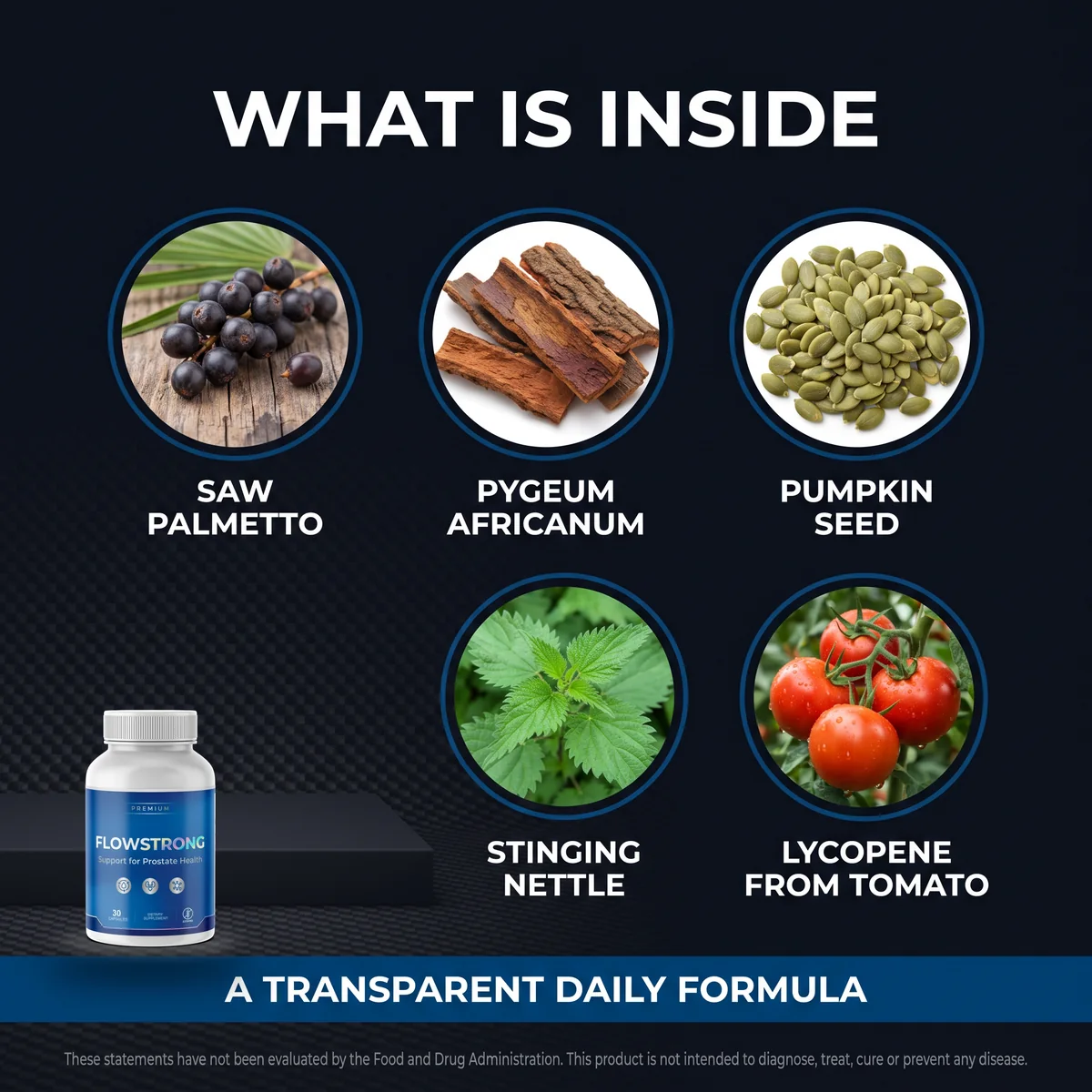
For most men, the more useful question is not “which one” but “how do I get both, at sensible amounts, in one convenient serving?” Buying two separate single-ingredient bottles means two products to remember, two label checks, and often a higher combined cost than a single stack. A thoughtfully built multi-botanical formula gives you saw palmetto and nettle root together — usually alongside complementary plants such as pygeum, pumpkin seed and tomato lycopene — in one daily capsule.
That said, there are cases for going single-ingredient: if you react to something and want to isolate the cause, or if a clinician has advised a specific ingredient. Outside those situations, the pairing is the traditional norm for a reason. If you want to compare saw palmetto against another popular partner, our guide to pygeum vs saw palmetto covers that duo in the same way.

How to read a label that lists both
When a product features saw palmetto and stinging nettle together, a few checks separate a serious formula from a marketing exercise:
- ✓ Named amounts. Each ingredient should show a milligram figure, not vanish inside a “proprietary blend.”
- ✓ Root, specified. The nettle should be listed as root.
- ✓ Standardized saw palmetto. A stated fatty-acid percentage signals a more consistent extract.
- ✓ Clean manufacturing. GMP facility, ideally FDA-registered, non-GMO, and a real company behind it.
- ✓ A guarantee. A money-back guarantee de-risks your first bottle.
These are the same fundamentals we apply to every product in our broader buyer’s guide to choosing a prostate supplement. Get them right and the nettle-versus-saw-palmetto question mostly answers itself: you want a formula that includes both, at honest doses, made to a standard you can trust.
A formula that pairs both — and more
Flow Strong™ combines saw palmetto and stinging nettle root with pygeum, pumpkin seed and tomato lycopene in a single once-daily, plant-based veggie capsule — made in the USA in a GMP facility and backed by a 60-day money-back guarantee. Multi-bottle packages offer the best value per bottle.
Check Flow Strong Pricing
Cost and convenience: the practical tie-breaker
Because prostate botanicals are used gradually rather than as a quick fix, most men take them over months. That makes two practical factors matter as much as the plant biology: cost per day and the odds you keep the routine going. A combined formula wins on both. One bottle to reorder is easier to sustain than two, and multi-bottle packs lower the per-bottle price while ensuring you do not run out mid-routine — the single most common reason a supplement habit quietly collapses.
This is also why the “which single ingredient is best” framing can lead you astray. Chasing the perfect standalone botanical can cost more and deliver less than simply choosing a sensible stack you will actually take every day. Consistency beats optimization almost every time.
The bottom line
Stinging nettle and saw palmetto are not rivals to be ranked — they are two different plants, using two different parts (root and berry), from two different traditions, that men have long used together. Saw palmetto tends to anchor a formula; nettle root is a classic supporting partner. Rather than agonizing over which single ingredient wins, look for a well-made formula that includes both at clear, honest doses, and give it a fair, uninterrupted run. To go deeper on individual ingredients, see our guide to pumpkin seed oil for prostate health, or head back to the Flow Strong homepage to see how the full formula fits together.
What has been tested for nettle root specifically
Stinging nettle root and stinging nettle leaf are different products, and only the root is the one men’s prostate formulas are interested in. A randomized controlled trial of Urtica dioica root extract on clinical and biochemical parameters in patients with benign prostatic hyperplasia (Pak J Biol Sci, 2020) is representative of the evidence base: over twelve weeks it reported effects on the international prostate symptom score and on several blood markers, negligible effects on everything else it measured, and no side effects — a small, partly positive study nowhere near large enough to settle the question. That is a fair description of nettle root research as a whole — encouraging, thin, and usually studied in combination rather than alone.
Saw palmetto has been studied far more and argued about far more, so the honest comparison is not “which works better” but “which has been looked at harder.” If your label says nettle without saying root, that is a question worth asking the seller. Our guide to how much saw palmetto per day sets the benchmark for the partner ingredient, and our comparison of pygeum and saw palmetto completes the traditional European trio.
And the line no supplement page should blur: urinary symptoms are a medical matter. Blood in your urine or semen, pain or burning when you pass urine, fever or chills alongside urinary symptoms, or any new or worsening change in how often or how urgently you go — those need a doctor who can examine and test you, not a capsule. Being unable to pass urine at all is a reason to seek urgent care. These symptoms can point to a urinary infection, an enlarged prostate or prostate cancer, and clinical guidance on evaluating them is summarised in the American Academy of Family Physicians’ evidence review of benign prostatic hyperplasia (Am Fam Physician, 2023) and by the NIDDK. No dietary supplement, Flow Strong included, is a treatment for any of them.
Frequently asked questions
Is stinging nettle or saw palmetto better for the prostate?
Neither is simply better — they are different plants used in different ways. Saw palmetto is a berry extract that is the best-known men’s prostate botanical, while stinging nettle root is a traditional European companion herb. Many formulas combine both because they are considered complementary rather than interchangeable.
Can you take stinging nettle and saw palmetto together?
Yes. Combining stinging nettle root with saw palmetto is a long-standing pairing in men’s wellness formulas, and the two are frequently sold together. As with any supplement, follow the label and speak with your doctor if you take medication or have a medical condition.
What part of the stinging nettle plant is used for prostate support?
The root, not the leaf. Nettle leaf is used for other traditional purposes, but it is the root extract that men’s prostate formulas rely on. When reading a label, check that it specifies nettle root.
Does saw palmetto work the same way as stinging nettle?
They are described differently in traditional use. Saw palmetto is valued for its fatty-acid rich berry extract, while nettle root contributes its own plant compounds. Because their profiles differ, they are usually seen as partners in a stack rather than substitutes for one another.
How do I choose a formula with nettle and saw palmetto?
Look for named ingredients at clear milligram amounts, standardization on the saw palmetto where possible, nettle listed as root, and quality markers such as GMP manufacturing. Avoid proprietary blends that hide how much of each ingredient you actually receive.
References
- Urtica Dioica Root Extract on Clinical and Biochemical Parameters in Patients with Benign Prostatic Hyperplasia, Randomized Controlled Trial (Pakistan journal of biological sciences : PJBS, 2020) pubmed.ncbi.nlm.nih.gov
- Benign Prostatic Hyperplasia: Rapid Evidence Review (American family physician, 2023) pubmed.ncbi.nlm.nih.gov
- National Center for Complementary and Integrative Health (NCCIH). “Saw Palmetto.” nccih.nih.gov
- National Center for Complementary and Integrative Health (NCCIH). “Stinging Nettle.” nccih.nih.gov
- NIH Office of Dietary Supplements. “Dietary Supplements: What You Need to Know.” ods.od.nih.gov
- U.S. Food & Drug Administration. “Dietary Supplements — Current Good Manufacturing Practices (CGMPs).” fda.gov
- Federal Trade Commission. “Health Products Compliance Guidance.” ftc.gov
† These statements have not been evaluated by the Food and Drug Administration. Flow Strong is a dietary supplement and is not intended to diagnose, treat, cure or prevent any disease. This article is general information only and is not medical advice; consult your physician before starting any supplement, especially if you take medication or have a medical condition.