Pygeum vs Saw Palmetto for Prostate: What’s the Difference?
| The question | Pygeum vs saw palmetto — two of the most popular prostate-supplement botanicals, and shoppers often wonder which to choose. |
| The key difference | Pygeum is a bark extract from the African cherry tree; saw palmetto is a berry extract from a small American fan palm. |
| Do you choose? | Not necessarily — they are widely seen as complementary, so many quality formulas simply include both. |
| Best approach | Pick a standardized, honestly labeled product, take it consistently, and keep your doctor in the loop. |
Walk down the men’s-health aisle or scroll a supplement listing and you will meet two botanicals again and again: pygeum and saw palmetto. They show up side by side on countless prostate labels, they are sometimes pitched as competitors, and to a shopper trying to make a sensible choice they can feel almost interchangeable. They are not. Understanding how pygeum vs saw palmetto actually differ — where each one grows, which part of the plant is used, and how men have traditionally taken them — makes reading any prostate label far less confusing.
This is a plain-English comparison written for men over 40 who want to make an informed buying decision. It is general educational information about two popular plant-derived ingredients, not medical advice, and nothing here is a claim to treat or cure anything.
Pygeum vs saw palmetto: the quick distinction
The simplest way to keep the two straight is to remember which part of which plant you are buying. Saw palmetto comes from a berry; pygeum comes from bark. One is a fruit extract from a North American palm, the other is a bark extract from an African evergreen tree. They are both botanicals with a traditional role in men’s prostate and urinary wellness, but they are botanically unrelated.
Saw palmetto (Serenoa repens) is an extract of the dark berries of a small fan palm native to the southeastern United States. Those berries are rich in fatty acids and plant sterols, and men have leaned on them in traditional routines for generations. It is the ingredient most people have heard of first, and it has the longest, most familiar shelf presence in the American market.
Pygeum (Pygeum africanum, also written Prunus africana) is an extract of the bark of the African cherry tree, an evergreen that grows in the highland forests of central and southern Africa. Pygeum has a deep tradition of use in Europe and Africa, where bark preparations have been part of men’s wellness practice for a very long time. On modern labels it is usually standardized to its natural plant sterol content.
Where each botanical comes from
Saw palmetto: the classic American berry
Saw palmetto is harvested from the fruit of a low, spreading palm that carpets large stretches of Florida and the Gulf Coast. Because it is a whole-fruit extract, its character can vary with how it is grown, harvested and processed, which is exactly why reputable extracts are standardized — commonly to around 85–95% fatty acids and sterols — so each dose is consistent. When a label says “standardized saw palmetto,” that consistency is part of what you are paying for.
Pygeum: the traditional African bark
Pygeum is prepared from the bark of Prunus africana. It carries a strong European and African tradition, and it is valued as a source of naturally occurring phytosterols and other plant compounds. Because the tree is slow-growing and harvesting has raised sustainability concerns, responsible suppliers source pygeum from managed, sustainable programs — a small but meaningful detail worth noticing when you compare brands.
How men traditionally use pygeum and saw palmetto
Both ingredients live in the same corner of the wellness world: everyday, long-term support for normal prostate and urinary comfort in aging men. Neither is used as a quick fix. In traditional and general use, both are taken daily and consistently over weeks and months, on the understanding that botanicals work gradually rather than overnight.
It is worth being honest about the evidence. Research on both pygeum and saw palmetto is ongoing, and results across studies have been mixed. Health authorities generally describe them as popular, well-tolerated ingredients rather than proven treatments. That is why we frame both as traditional and general-use botanicals here, and why the most sensible approach pairs any supplement with good habits and regular check-ups. For the everyday basics that do the foundational work, see our companion guide on how to support prostate health after 40.
Pygeum vs saw palmetto: a side-by-side
- ✓ Source plant: Saw palmetto is a berry from an American fan palm; pygeum is bark from the African cherry tree.
- ✓ Tradition: Saw palmetto is the familiar American staple; pygeum has a strong European and African heritage.
- ✓ What’s inside: Both supply plant sterols and fatty compounds, but from very different botanical matrices.
- ✓ Relationship: They are complementary, not rivals — which is why they so often appear together.
- ✓ On the label: Look for standardization on both, plus a clearly stated amount for each.
Do you have to choose one?
Here is the point that trips up most shoppers: framing it as pygeum versus saw palmetto is often a false choice. The two are widely regarded as complementary botanicals, and they have been combined in men’s formulas for decades precisely because they come from different plants and bring different plant compounds to the table. Rather than debating which single ingredient wins, many men are better served by asking whether a formula pairs complementary botanicals sensibly and in honest amounts.
That is the logic behind a multi-botanical approach. If you want to understand why some men prefer a full stack over any one isolated ingredient, our breakdown of a multi-ingredient prostate formula vs saw palmetto alone walks through the trade-offs in detail. And if you are still deciding between individual ingredients, our comparison of saw palmetto vs beta-sitosterol is a useful companion read.

How Flow Strong combines both
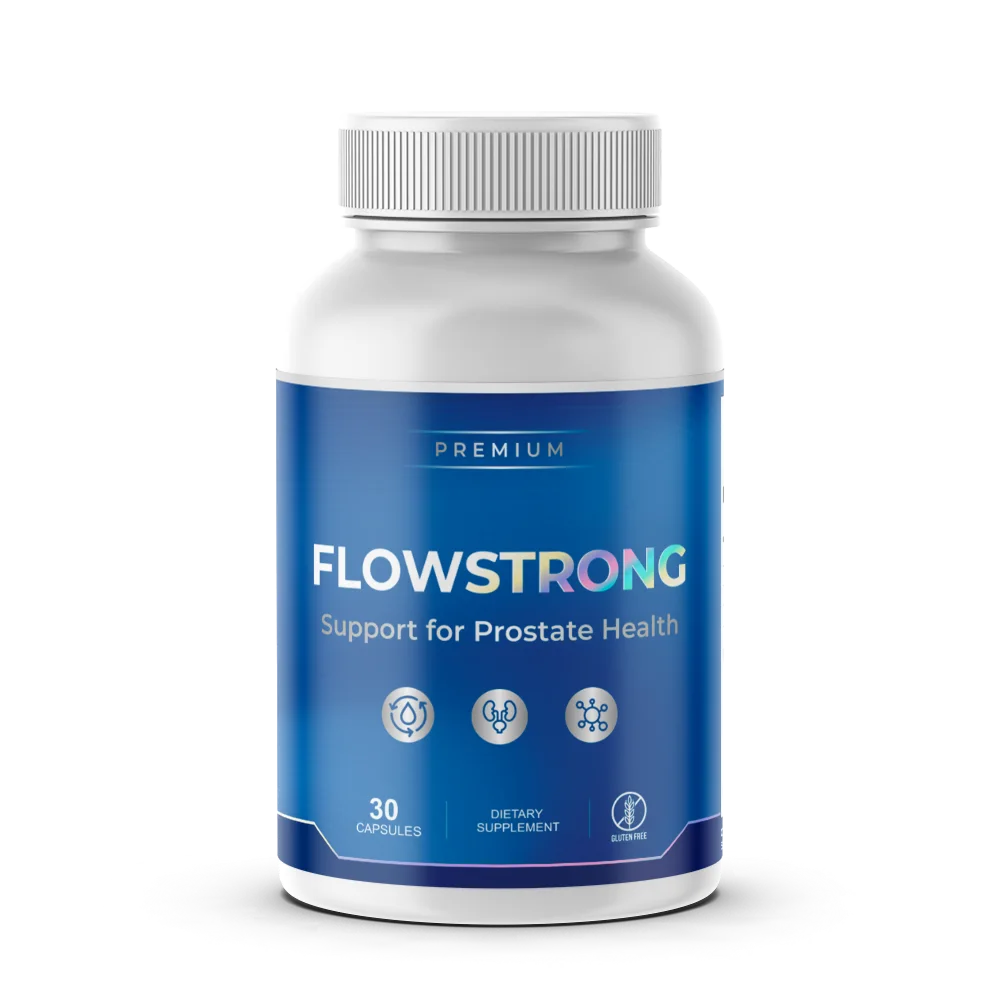
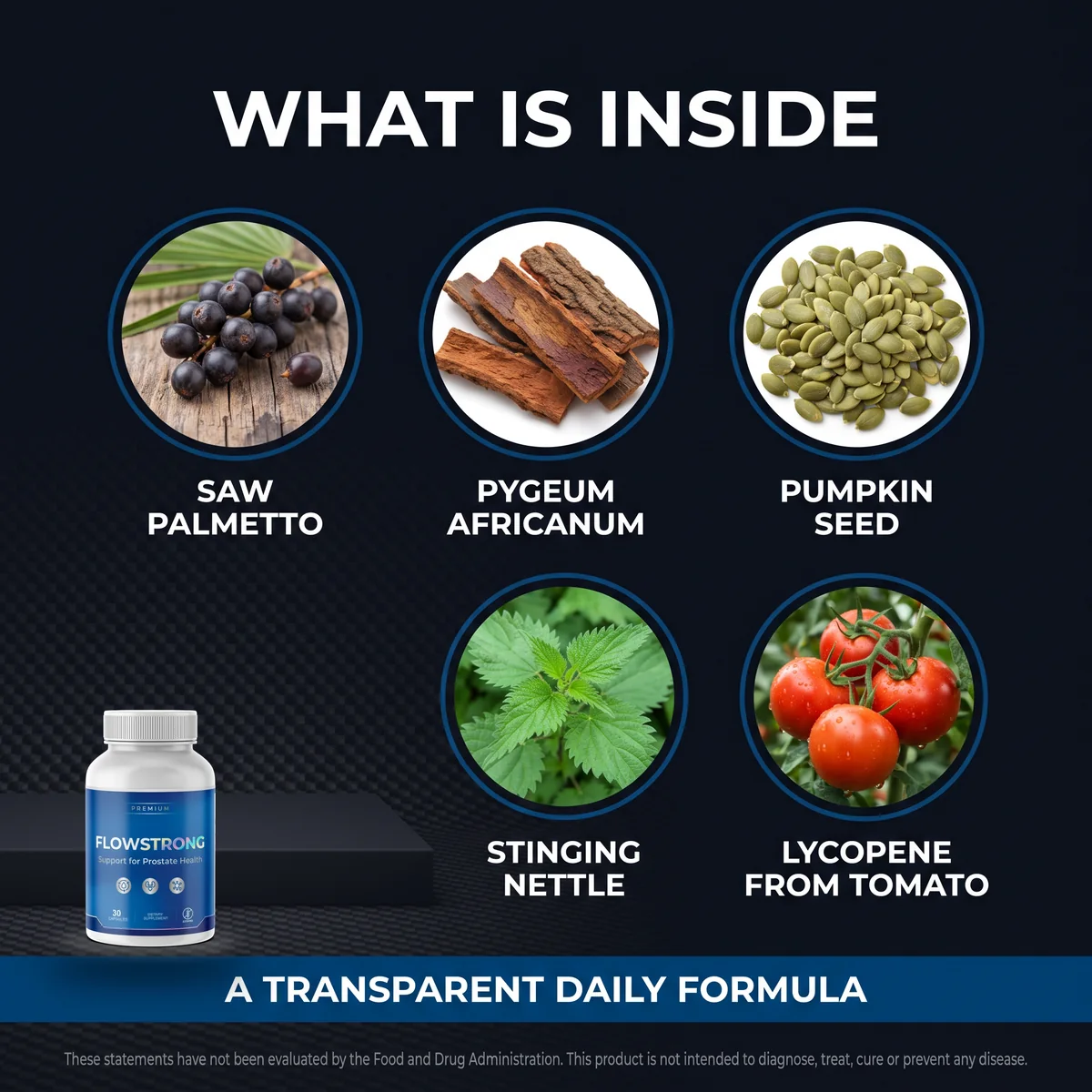
Flow Strong™ is built as a whole-plant stack rather than a single isolate. It brings standardized saw palmetto together with pygeum africanum, pumpkin seed, stinging nettle and tomato lycopene — the plants men have leaned on for generations — in consistent, once-daily amounts. The goal is not to chase one hero botanical but to combine complementary ones thoughtfully. You can view the full ingredient panel and current packages on the order page.
Want pygeum and saw palmetto in one capsule?
Flow Strong™ combines pygeum, saw palmetto, pumpkin seed, stinging nettle and tomato lycopene in one plant-based veggie capsule — backed by a 60-day money-back guarantee. Multi-bottle packages carry the best per-bottle value.
See Flow Strong PackagesHow to read the label like a pro
Whichever botanical you lean toward, a few label habits protect you. Check for standardization on both pygeum and saw palmetto, so you know the extract is consistent from batch to batch. Check for a clearly listed amount of each, so you are not guessing. Favor products that name a manufacturing standard such as GMP, ideally made in an FDA-registered facility, and look for a satisfaction guarantee so a first bottle is low-risk. For a full walkthrough, see our buyer’s guide to choosing a prostate supplement, or head back to the Flow Strong homepage to see how the formula is put together.
A quick word on tolerability and your doctor
Both pygeum and saw palmetto are generally described as well-tolerated when used as directed, but “natural” never means “irrelevant to your medications.” Botanical extracts and plant sterols can, in principle, interact with certain prescriptions or affect people with specific conditions. If you take blood thinners, are scheduled for surgery, or manage an ongoing health issue, it is worth a two-minute conversation with your doctor or pharmacist before you add either ingredient. That is true of any supplement, not just these two.
It is also smart to remember what a supplement is for. Neither ingredient replaces age-appropriate prostate screening or a check-up for a symptom that concerns you. Think of pygeum and saw palmetto as everyday, general-wellness botanicals that sit alongside medical care — not in place of it. Used that way, the “which one” question matters far less than simply choosing a quality product and staying consistent.
The bottom line
Pygeum and saw palmetto are not really enemies. One is a time-honored American berry extract; the other is a traditional African bark extract. Both are used for everyday prostate and urinary wellness, both work best taken consistently, and neither is a substitute for medical care. Rather than fixating on a single botanical, look for a well-formulated, standardized, honestly labeled product — and keep your doctor in the loop about age-appropriate screening.
How the evidence for the two botanicals compares
Saw palmetto has more research and more controversy; pygeum has a longer clinical tradition and a thinner modern file. A review of the experience and evidence of Pygeum africanum in urological practice (Actas Urol Esp, 2020) describes decades of use in European urology alongside trials that are mostly small and older by today’s standards. Saw palmetto, by contrast, has been through large modern reviews that reached genuinely conflicting conclusions. Neither ingredient has a settled verdict; they are unsettled in different ways.
For a buyer, that means the choice is rarely either-or in practice, because most formulas carry both and pygeum is almost never sold alone at a meaningful amount. What matters is whether the label states what it contains. Our comparison of stinging nettle and saw palmetto covers the other classic European pairing, and our guide to whether prostate supplements are safe deals with the interactions worth raising with a pharmacist before you combine anything.
And the line no supplement page should blur: urinary symptoms are a medical matter. Blood in your urine or semen, pain or burning when you pass urine, fever or chills alongside urinary symptoms, or any new or worsening change in how often or how urgently you go — those need a doctor who can examine and test you, not a capsule. Being unable to pass urine at all is a reason to seek urgent care. These symptoms can point to a urinary infection, an enlarged prostate or prostate cancer, and clinical guidance on evaluating them is summarised in the American Academy of Family Physicians’ evidence review of benign prostatic hyperplasia (Am Fam Physician, 2023) and by the NIDDK. No dietary supplement, Flow Strong included, is a treatment for any of them.
Frequently asked questions
Is pygeum the same as saw palmetto?
No. Pygeum is an extract of the bark of the African cherry tree (Prunus africana), while saw palmetto is an extract of the berry of a small fan palm (Serenoa repens). They come from completely different plants and different parts of those plants, but both have a long history of traditional use for everyday prostate and urinary wellness in men.
Which is better, pygeum or saw palmetto?
Neither is a proven treatment, and framing it as one versus the other is often a false choice. Saw palmetto has the longer and more familiar track record in the United States, while pygeum has a strong tradition in Europe and Africa. Because the two are frequently combined, many men simply choose a well-made multi-botanical formula that includes both. Individual experiences vary.
Can you take pygeum and saw palmetto together?
They are commonly paired on the same label, because they are seen as complementary botanicals rather than rivals. As with any supplement, talk to your doctor before combining products, especially if you take medication or have a medical condition.
Does Flow Strong contain pygeum and saw palmetto?
Yes. Flow Strong is built as a whole-plant stack that combines standardized saw palmetto and pygeum africanum with pumpkin seed, stinging nettle and tomato lycopene, rather than relying on a single isolated botanical.
How long before I should expect to notice anything from either?
Botanicals are used gradually and consistently rather than for a quick effect. Most men give a daily routine a fair, uninterrupted trial of several weeks to a few months. Consistency matters more than any single dose, and results vary from person to person. For more on this, see our guide on how long a prostate supplement takes to work.
References
- Review of the experience and evidence of Pygeum africanum in urological practice (Actas urologicas espanolas, 2020) pubmed.ncbi.nlm.nih.gov
- Benign Prostatic Hyperplasia: Rapid Evidence Review (American family physician, 2023) pubmed.ncbi.nlm.nih.gov
- National Center for Complementary and Integrative Health (NCCIH). “Saw Palmetto.” nccih.nih.gov
- National Institute of Diabetes and Digestive and Kidney Diseases (NIDDK). “Prostate Enlargement (Benign Prostatic Hyperplasia).” niddk.nih.gov
- NIH Office of Dietary Supplements. “Dietary Supplements: What You Need to Know.” ods.od.nih.gov
- Mayo Clinic. “Benign prostatic hyperplasia (BPH) — Diagnosis & treatment.” mayoclinic.org
- U.S. Forest Service & CITES resources on Prunus africana (pygeum) sustainable sourcing. fs.usda.gov
† These statements have not been evaluated by the Food and Drug Administration. Flow Strong is a dietary supplement and is not intended to diagnose, treat, cure or prevent any disease. This article is general information only and is not medical advice; consult your physician before starting any supplement, especially if you take medication or have a medical condition.