Saw Palmetto vs Beta-Sitosterol for Prostate Health: What’s the Difference?
| The question | Saw palmetto vs beta-sitosterol — two popular prostate-supplement ingredients that shoppers often confuse. |
| The key difference | Saw palmetto is a whole-berry extract; beta-sitosterol is a single, purified plant sterol found inside many of the same plants. |
| Do you choose? | Not really — beta-sitosterol occurs naturally within saw palmetto, so a good multi-botanical formula delivers both. |
| Best approach | Pick a standardized, honestly labeled product, take it consistently, and keep your doctor in the loop. |
If you have spent any time reading prostate-supplement labels, two names come up more than almost any others: saw palmetto and beta-sitosterol. They often appear on the same bottle, they are sometimes marketed as rivals, and to a shopper standing in the vitamin aisle they can look almost interchangeable. They are not. Understanding how saw palmetto vs beta-sitosterol actually differ — where each one comes from, how men traditionally use them, and how they fit together — makes it far easier to read a label with confidence and pick a formula that suits you.
This is a plain-English comparison, written for men over 40 who want to make an informed buying decision. It is general educational information about two popular plant-derived ingredients, not medical advice, and nothing here is a claim to treat or cure anything.
Saw palmetto vs beta-sitosterol: the quick distinction
The simplest way to keep them straight is this: saw palmetto is a whole-plant extract, and beta-sitosterol is a single, purified plant compound. One is a broad botanical; the other is one specific molecule that happens to occur inside many botanicals — including saw palmetto itself.
Saw palmetto (Serenoa repens) is an extract of the berries of a small fan palm native to the southeastern United States. Those berries contain a mixture of fatty acids, plant sterols and other compounds, and men have used them in traditional wellness routines for generations. When you buy a saw palmetto extract, you are buying that whole natural blend, standardized to a certain fatty-acid content.
Beta-sitosterol is a phytosterol — a plant sterol structurally similar to cholesterol — found in nuts, seeds, vegetable oils and many of the same plants used in men’s formulas. On a supplement label it is usually an isolated, concentrated form. So rather than a whole plant, you are getting one focused constituent.
Where each one comes from
Saw palmetto: the classic whole-berry botanical
Saw palmetto is the ingredient most men have heard of first, and it is the one with the longest track record in men’s prostate and urinary wellness traditions. Because it is a whole-plant extract, its character can vary depending on how it is grown, harvested and processed. Reputable extracts are standardized — commonly to around 85–95% fatty acids and sterols — so that each dose is consistent. When you see “standardized saw palmetto” on a label, that standardization is what you are paying for.
Beta-sitosterol: the isolated plant sterol
Beta-sitosterol can be extracted from several plant sources, including soy, pine and other seeds. Interestingly, it is one of the naturally occurring sterols inside saw palmetto berries, pumpkin seeds and stinging nettle. That overlap is a big part of why the two ingredients so often share a bottle: a well-built botanical stack already delivers phytosterols like beta-sitosterol as part of the natural plant matrix, without needing a separate isolate.
How men traditionally use them
Both ingredients belong to the same corner of the wellness world: everyday, long-term support for normal prostate and urinary comfort in aging men. Neither is used as a quick fix. In traditional and general use, both are taken daily and consistently over weeks and months, on the understanding that botanicals work gradually rather than overnight.
It is worth being honest about the science: research on both saw palmetto and beta-sitosterol is ongoing, and results across studies have been mixed. Health authorities describe them as popular, generally well-tolerated ingredients rather than proven treatments. That is exactly why we frame them as traditional and general-use ingredients here, and why the most sensible approach pairs any supplement with good habits and regular check-ups. For the everyday habits that do the foundational work, see our companion guide on how to support prostate health after 40.
Saw palmetto vs beta-sitosterol: a side-by-side
- ✓ What it is: Saw palmetto is a whole-berry extract; beta-sitosterol is a single purified plant sterol.
- ✓ Breadth: Saw palmetto delivers a natural blend of fatty acids and sterols; beta-sitosterol is one focused constituent.
- ✓ Overlap: Beta-sitosterol occurs naturally inside saw palmetto, pumpkin seed and nettle, so the two are not truly opposites.
- ✓ Tradition: Saw palmetto has the longer, more familiar history in men’s routines; beta-sitosterol is a more recent, isolate-driven addition.
- ✓ On the label: Look for standardization on saw palmetto, and a clearly stated amount on beta-sitosterol.
Do you have to choose one?
Here is the point that trips up most shoppers: framing it as saw palmetto versus beta-sitosterol is a bit of a false choice. Because beta-sitosterol is one of the phytosterols found within saw palmetto and other men’s botanicals, a thoughtfully built formula gives you both the whole-plant extract and its naturally occurring sterols in one place. Rather than debating which single ingredient wins, many men are better served by asking whether a formula combines complementary botanicals sensibly.
That is the reasoning behind a multi-botanical approach. If you want to understand why some men prefer a full stack over any one isolated ingredient, our breakdown of a multi-ingredient prostate formula vs saw palmetto alone walks through the trade-offs in detail.

How Flow Strong handles both
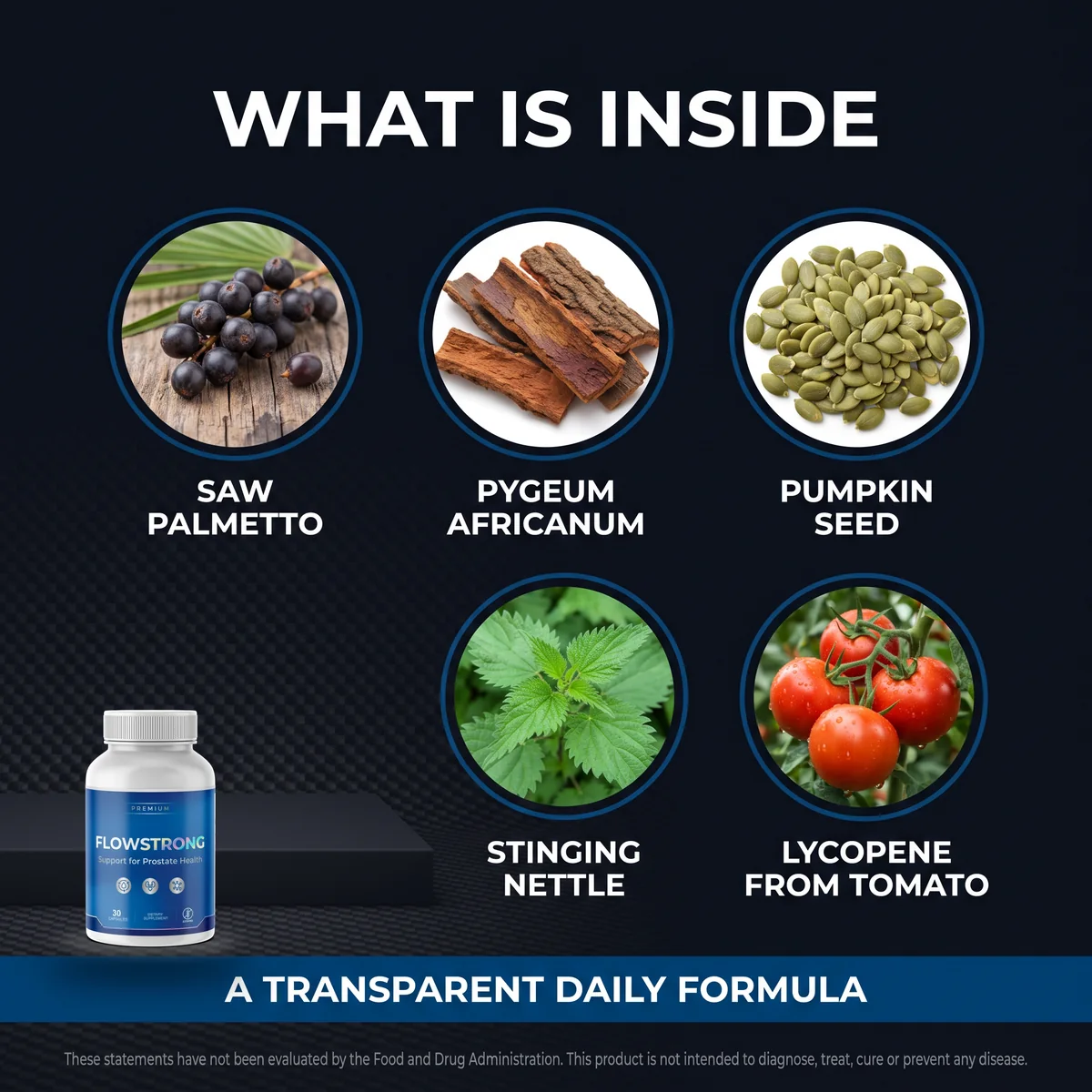
Flow Strong™ is built as a whole-plant stack rather than a single isolate. It combines standardized saw palmetto with pygeum africanum, pumpkin seed, stinging nettle and tomato lycopene — several of which naturally contain phytosterols such as beta-sitosterol within their plant matrix. The idea is not to chase one hero molecule but to bring together the plants men have leaned on for generations in consistent, once-daily amounts. You can view the full ingredient panel and current packages on the order page.
Prefer the whole plant, not a single isolate?
Flow Strong™ brings saw palmetto together with pygeum, pumpkin seed, stinging nettle and tomato lycopene in one plant-based veggie capsule — backed by a 60-day money-back guarantee. Multi-bottle packages carry the best per-bottle value.
See Flow Strong PackagesHow to read the label like a pro
Whichever direction you lean, a few label habits protect you. Check for standardization on saw palmetto (a stated fatty-acid percentage). Check for a clearly listed amount on any beta-sitosterol so you are not guessing. Favor products that name a manufacturing standard such as GMP, ideally made in an FDA-registered facility, and look for a satisfaction guarantee so a first bottle is low-risk. For a full walkthrough, see our buyer’s guide to choosing a prostate supplement, or head back to the Flow Strong homepage to see how the formula is put together.
A quick word on tolerability and your doctor
Both saw palmetto and beta-sitosterol are generally described as well-tolerated when used as directed, but “natural” never means “irrelevant to your medications.” Plant sterols and botanical extracts can, in principle, interact with certain prescriptions or affect people with specific conditions. If you take blood thinners, are scheduled for surgery, or manage an ongoing health issue, it is worth a two-minute conversation with your doctor or pharmacist before you add either ingredient. That is true of any supplement, not just these two.
It is also smart to remember what a supplement is for. Neither ingredient replaces age-appropriate prostate screening or a check-up for a symptom that concerns you. Think of saw palmetto and beta-sitosterol as everyday, general-wellness ingredients that sit alongside medical care — not in place of it. Used that way, the “which one” debate matters far less than simply choosing a quality product and staying consistent.
The bottom line
Saw palmetto and beta-sitosterol are not really enemies. One is a time-honored whole-berry extract; the other is a plant sterol that lives inside that berry and many others. Both are used traditionally for everyday prostate and urinary wellness, both work best taken consistently, and neither is a substitute for medical care. Rather than fixating on a single ingredient, look for a well-formulated, standardized, honestly labeled product — and keep your doctor in the loop about age-appropriate screening.
Two ingredients, one overlapping story
Beta-sitosterol is a plant sterol, saw palmetto is a berry extract, and the reason they get compared is that saw palmetto contains sterols of its own. A review of the use of beta-sitosterol for prostate cancer and benign prostatic hyperplasia (Am J Clin Exp Urol, 2023) sets out what is known about the isolated sterol, and reading it beside the saw palmetto literature makes the relationship clear: one is a purified compound, the other a whole extract that carries some of the same chemistry plus its fatty acids.
Practically, that means a formula containing both is not doubling up so much as approaching the same idea from two directions, and a formula containing neither in a stated amount is not really in the conversation. The label test matters more than the ingredient debate — which is why our explainer on what “FDA approved” really means for a supplement is worth reading before you buy, along with our comparison of capsules, softgels and gummies if you are also weighing the format.
And the line no supplement page should blur: urinary symptoms are a medical matter. Blood in your urine or semen, pain or burning when you pass urine, fever or chills alongside urinary symptoms, or any new or worsening change in how often or how urgently you go — those need a doctor who can examine and test you, not a capsule. Being unable to pass urine at all is a reason to seek urgent care. These symptoms can point to a urinary infection, an enlarged prostate or prostate cancer, and clinical guidance on evaluating them is summarised in the American Academy of Family Physicians’ evidence review of benign prostatic hyperplasia (Am Fam Physician, 2023) and by the NIDDK. No dietary supplement, Flow Strong included, is a treatment for any of them.
Frequently asked questions
Is saw palmetto the same as beta-sitosterol?
No. Saw palmetto is a whole extract of the Serenoa repens berry, which contains a natural mix of fatty acids and plant sterols. Beta-sitosterol is a single, purified plant sterol that happens to occur inside saw palmetto and many other plants. They overlap, but they are not the same thing.
Which is better for prostate support, saw palmetto or beta-sitosterol?
Neither is a proven treatment, and framing it as one versus the other is a bit of a false choice. Both are used traditionally for everyday prostate and urinary wellness. Because beta-sitosterol is found within saw palmetto, many men simply choose a well-made multi-botanical formula that includes the whole plant. Individual experiences vary.
Can you take saw palmetto and beta-sitosterol together?
They are commonly found together on the same label, since beta-sitosterol is one of the sterols naturally present in saw palmetto and related plants. As always, talk to your doctor before combining supplements, especially if you take medication.
Does Flow Strong contain beta-sitosterol?
Flow Strong is built as a whole-plant stack — saw palmetto, pygeum, pumpkin seed, stinging nettle and tomato lycopene — several of which naturally contain phytosterols such as beta-sitosterol within their plant matrix, rather than relying on a single isolated sterol.
How long before I should expect to notice anything?
Botanicals are used gradually and consistently rather than for a quick effect. Most men give a daily routine a fair, uninterrupted trial of several weeks to a few months. Consistency matters more than any single dose, and results vary from person to person.
References
- The use of beta-sitosterol for the treatment of prostate cancer and benign prostatic hyperplasia (American journal of clinical and experimental urology, 2023) pubmed.ncbi.nlm.nih.gov
- Benign Prostatic Hyperplasia: Rapid Evidence Review (American family physician, 2023) pubmed.ncbi.nlm.nih.gov
- National Center for Complementary and Integrative Health (NCCIH). “Saw Palmetto.” nccih.nih.gov
- National Institute of Diabetes and Digestive and Kidney Diseases (NIDDK). “Prostate Enlargement (Benign Prostatic Hyperplasia).” niddk.nih.gov
- NIH Office of Dietary Supplements. “Dietary Supplements: What You Need to Know.” ods.od.nih.gov
- Mayo Clinic. “Benign prostatic hyperplasia (BPH) — Lifestyle and home remedies.” mayoclinic.org
- Harvard T.H. Chan School of Public Health, The Nutrition Source. “Tomatoes & Lycopene.” nutritionsource.hsph.harvard.edu
† These statements have not been evaluated by the Food and Drug Administration. Flow Strong is a dietary supplement and is not intended to diagnose, treat, cure or prevent any disease. This article is general information only and is not medical advice; consult your physician before starting any supplement, especially if you take medication or have a medical condition.