Are Prostate Supplements FDA Approved? What the Rules Actually Say
| Short answer | No supplement is “FDA approved” — the FDA approves drugs, not dietary supplements. That is normal for the whole category. |
| How they’re regulated | Under the 1994 DSHEA law, makers are responsible for safety and labeling; the FDA enforces manufacturing rules and acts on problems. |
| Watch the wording | “FDA registered facility” is real and meaningful; “FDA approved supplement” is a red flag. |
| Look for instead | GMP manufacturing, made in the USA, named doses, non-GMO, third-party testing. |
It is one of the most sensible questions a careful shopper can ask: are prostate supplements FDA approved? You want to know that what you are putting in your body has been checked by someone. The honest answer surprises a lot of people — and understanding it will make you far harder to fool. In short: no dietary supplement is “FDA approved,” and that is true of the entire category, not a knock against any one product. This guide explains exactly how supplements are regulated, why the phrase “FDA approved” on a supplement is a warning sign, and what to look for instead.
This is general, educational information about US supplement regulation, not legal or medical advice. No supplement is intended to diagnose, treat, cure or prevent any disease.
Why no supplement is “FDA approved”
The FDA has two very different jobs depending on what it is looking at. For drugs, it reviews and approves each product before it can be sold — that is the familiar “FDA approved” process. For dietary supplements, the system works the other way around. The FDA does not approve supplements before they go on the market. Instead, the manufacturer is legally responsible for making sure a product is safe and honestly labeled, and the FDA oversees the industry through manufacturing rules, post-market monitoring and enforcement.
So when a prostate supplement — or any supplement — claims to be “FDA approved,” that claim is simply not possible under the law. It tells you the seller either misunderstands the rules or is hoping you do. Legitimate brands never make that claim, because they know the category is not approved product-by-product.
How supplements really are regulated
The framework comes from the Dietary Supplement Health and Education Act of 1994 (DSHEA). Under it, the responsibilities break down like this:
- ✓ Manufacturers are responsible for the safety of their products and the truthfulness of their labels before selling them.
- ✓ The FDA enforces Good Manufacturing Practices (GMP) — rules covering how, where and under what controls products are made.
- ✓ The FDA monitors the market after products are on shelves and can act against unsafe or mislabeled products.
- ✓ The FTC polices advertising, requiring that health claims be truthful and not misleading.
In other words, there is real oversight — it just happens through manufacturing standards and enforcement rather than pre-market approval. This is also why the compliant language you see on good supplement sites (“not intended to diagnose, treat, cure or prevent any disease”) is a sign of a brand that understands and follows the rules, not a weakness.
“FDA registered facility” is a different — and real — thing
Here is where wording matters. “FDA approved supplement” is not a real status. But “made in an FDA-registered facility” is real and meaningful. It means the factory where the product is made is registered with the FDA and subject to its GMP rules and inspections. It speaks to how the product is made — the controls, cleanliness, testing and record-keeping — rather than an endorsement of the product itself.
That distinction is worth internalizing, because it is the exact spot where marketing tries to blur the line. A trustworthy label will say something like “manufactured in a GMP-certified, FDA-registered facility.” A less trustworthy one will imply the product is “FDA approved.” Same three letters, very different meaning.
If they are not approved, how do you judge safety?
Since “FDA approved” is off the table for every supplement, you need better yardsticks. These are the markers that actually separate a serious product from a risky one:
- ✓ GMP manufacturing in an FDA-registered, US-based facility.
- ✓ Named ingredients at clear doses — no hidden “proprietary blends.”
- ✓ Third-party testing where available (for example a USP verified mark).
- ✓ Clean formulation — non-GMO, sensible ingredients, no wild claims.
- ✓ Honest language — traditional-use descriptions, not promises to “cure” anything.
These overlap heavily with the checklist in our buyer’s guide to choosing a prostate supplement, because judging manufacturing quality is really the practical version of the “is it safe?” question. For a deeper look at tolerability and interactions, see are prostate supplements safe.
Made the way a supplement should be
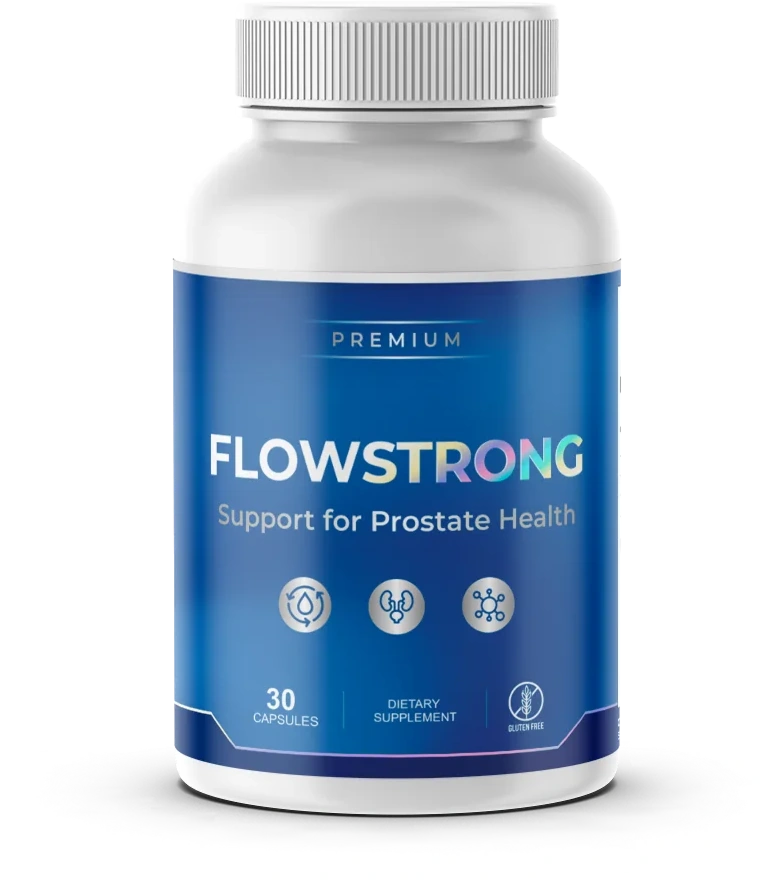
Flow Strong™ is manufactured in the USA in a GMP-certified, FDA-registered facility, with named plant-based ingredients on a transparent Supplement Facts panel and a 60-day money-back guarantee. We describe our botanicals by their traditional use — never as cures — because that is what the rules, and honesty, require.
See How Flow Strong Is Made
Spotting the red flags in marketing
Now that you know the rules, a few marketing tricks become obvious. Be skeptical of any product that says it is “FDA approved,” claims to be the “only approved” formula, promises to “cure” or “shrink” anything, or leans on dramatic before-and-after stories. None of that fits how the category is actually regulated. Conversely, restrained, compliant language — clear ingredient amounts, traditional-use descriptions, and the standard FDA disclaimer — is the signature of a brand playing it straight.
It also helps to remember that regulation is only half the picture. Even a perfectly made product only helps if you take it consistently and give it a fair trial; see our realistic timeline in are prostate supplements worth it for how to set expectations.

The bottom line
Are prostate supplements FDA approved? No — and neither is any other dietary supplement, because the FDA approves drugs, not supplements. What it does is regulate the category through manufacturing standards, labeling rules and enforcement. So “FDA approved” on a supplement is a red flag, while “made in an FDA-registered, GMP facility” is a genuine quality signal. Judge products on manufacturing, transparency and honest claims — and, as always, talk to your doctor before starting anything new. To keep learning, return to the Flow Strong homepage.
What “not FDA approved” means for what is actually in the bottle
Because the FDA does not approve supplements before sale, the accuracy of a supplement label is the manufacturer’s responsibility rather than a regulator’s guarantee — and that is not a theoretical concern. An analysis of beta-sitosterol levels in dietary supplements sold for benign prostatic hyperplasia (Cureus, 2024) measured what products actually contained and found considerable variability between them, with only one of those tested reaching a concentration the authors judged potentially useful. That is the practical consequence of pre-market approval not existing: two bottles with identical front-label promises can deliver very different amounts of the active.
This is why the label-reading habits in our guide to capsules, softgels and gummies matter more than any regulatory badge, and why knowing how much saw palmetto a day is typical for prostate support lets you tell a serious formula from a sprinkle of powder. A brand that states amounts and standardization is telling you something a regulator never checked; a brand that hides behind a proprietary blend is relying on the fact that nobody will.
And the line no supplement page should blur: urinary symptoms are a medical matter. Blood in your urine or semen, pain or burning when you pass urine, fever or chills alongside urinary symptoms, or any new or worsening change in how often or how urgently you go — those need a doctor who can examine and test you, not a capsule. Being unable to pass urine at all is a reason to seek urgent care. These symptoms can point to a urinary infection, an enlarged prostate or prostate cancer, and clinical guidance on evaluating them is summarised in the American Academy of Family Physicians’ evidence review of benign prostatic hyperplasia (Am Fam Physician, 2023) and by the NIDDK. No dietary supplement, Flow Strong included, is a treatment for any of them.
Frequently asked questions
Are prostate supplements FDA approved?
No dietary supplement is “FDA approved,” and that is true of the entire category, not just prostate products. The FDA approves drugs before they go on sale, but it regulates supplements differently — overseeing manufacturing, labeling and safety rather than approving each product in advance. Any supplement claiming to be “FDA approved” is misusing the term.
What does “FDA registered facility” mean?
It means the manufacturing facility is registered with the FDA and is subject to its Good Manufacturing Practice rules and inspections. It is a meaningful quality signal about how a product is made, but it is not the same as the product itself being approved or endorsed by the FDA.
How are dietary supplements regulated in the US?
Under the Dietary Supplement Health and Education Act of 1994, manufacturers are responsible for the safety and labeling of their products. The FDA sets and enforces Good Manufacturing Practices, monitors safety after products are on the market, and can take action against unsafe or mislabeled products.
If they are not FDA approved, are supplements safe?
“Not FDA approved” is normal for the whole category and does not mean unsafe. Safety comes from good manufacturing, honest labeling, sensible ingredients and third-party testing. Choose products made in GMP facilities and talk to your doctor if you take medication.
What should I look for instead of “FDA approved”?
Look for GMP manufacturing in an FDA-registered facility, made in the USA, named ingredients at clear doses, non-GMO formulation, third-party testing where available, and a company that describes ingredients by traditional use rather than making disease claims.
References
- Assessing β-Sitosterol Levels in Dietary Supplements for Benign Prostatic Hyperplasia: Implications for Therapeutic Efficacy (Cureus, 2024) pubmed.ncbi.nlm.nih.gov
- Benign Prostatic Hyperplasia: Rapid Evidence Review (American family physician, 2023) pubmed.ncbi.nlm.nih.gov
- U.S. Food & Drug Administration. “Dietary Supplements.” fda.gov
- U.S. Food & Drug Administration. “FDA 101: Dietary Supplements.” fda.gov
- U.S. Food & Drug Administration. “Current Good Manufacturing Practices (CGMPs) for Dietary Supplements.” fda.gov
- Federal Trade Commission. “Health Products Compliance Guidance.” ftc.gov
- NIH Office of Dietary Supplements. “Dietary Supplements: What You Need to Know.” ods.od.nih.gov
† These statements have not been evaluated by the Food and Drug Administration. Flow Strong is a dietary supplement and is not intended to diagnose, treat, cure or prevent any disease. This article is general information only and is not medical advice; consult your physician before starting any supplement, especially if you take medication or have a medical condition.